ブラウン管Side A · No.04
Old anime belongs on an old TV
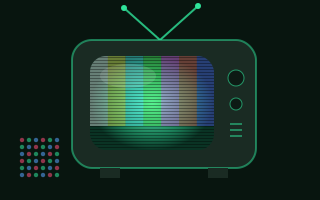
On Saturday, next to the bins behind our building, there was a 14-inch television with a strip of masking tape across the screen. Someone had written on it in marker: WORKS.
The lift was, of course, out of order. I live on the seventh floor. Please understand that I’m telling this story from a position of mild back pain.
Braun tube
In Japanese, an old tube television is a buraun-kan (ブラウン管), a “Braun tube”, after Karl Ferdinand Braun, the German physicist who built the first cathode-ray tube in 1897. I love that a whole country calls the thing by the name of a man who never watched television in his life.
A CRT isn’t just a screen. It’s an object with opinions. It’s deep and heavy, it gets warm, it smells faintly of hot dust for the first ten minutes, and when you switch it on you hear a high, thin whine that some people can’t hear at all. If you touch the glass afterwards, the static lifts the hair on your arm. It feels less like turning on a device and more like waking something up.
Why old anime looks right on it
Here’s the thing I didn’t fully understand until I had one on my desk: anime from the eighties was made for this.
Every frame of a TV series or an OVA from those years was drawn and painted by hand, photographed onto film, and then watched by its audience on a 4:3 tube television much like mine. The people making it knew that. A CRT softens edges, lets bright colours glow very slightly into their surroundings, and draws the picture as lines of light rather than a grid of hard little squares.
On a modern panel those images can look oddly harsh: every outline razor-sharp, every flat patch of paint suspiciously flat. On the tube, the outlines and the painted backgrounds melt into a single world. Neon signs actually glow. Night skies get depth. The blacks are deep, because a dark patch of a CRT screen simply isn’t lit.
The first thing I watched was the opening episode of Bubblegum Crisis — neon city, synth rock, motorbikes — from an old media player plugged in with a yellow composite cable. I’d seen it a dozen times on a laptop. I had never really seen it.
About remasters
I don’t want to be the person who says every new version is bad. A careful remaster that goes back to the original film is a gift, and some of them are beautiful.
But a lot of old anime reaches us in versions that weren’t made with much love: stretched to widescreen or cropped to fit it, scrubbed with noise reduction until the film grain turns into smudge, sharpened until every line wears a faint halo. The tube doesn’t fix any of that, of course. What it gives you is a reference point: this is roughly what people saw in 1987, in a dark room, after school or after work.
The VCR
You know how this goes. Once you have a CRT, you need a VCR. I found one at the flea market for less than the price of a pizza, with the remote held together by electrical tape.
There was even a tape still inside: somebody’s recording off the television, labelled “Film, part 2” in blue biro. Which film, I’ll never know — the tape had faded almost to snow. But I watched the first minute anyway, spellbound: static, stripes, and then for half a second somebody’s face from somebody else’s evening in the nineties.
VHS adds its own softness on top. Colours smear a little to the right, the edges of the picture wobble, and there’s a tracking button that you press while muttering, like a spell. With no tape in, the screen goes a flat, bright blue, with PLAY or STOP in chunky letters in the corner. If you were a child in the nineties, you just heard that blue screen, didn’t you?
I don’t watch everything this way. It would be exhausting. But some evenings I turn the lights off, put on something that was painted by hand in 1985, and let the tube do what it was built for.
The downsides
It’s fourteen inches. It weighs about as much as a sack of potatoes, takes over the whole desk, heats the corner of the room and whines. Getting a modern device to talk to it takes adapters, cables and a certain amount of luck. The picture is small enough that subtitles become an eye exercise, and the sound comes out of one tiny speaker on the side, so synth rock sounds as if it’s playing in the flat next door.
And one important note: never open the back of a CRT. Old televisions can hold a dangerous electrical charge inside for a long time after they’ve been unplugged. If something is broken in there, take it to someone who knows what they’re doing.
Should you?
I’m not telling you to haul one up seven floors. But if you love old animation and you see a fat little television next to the bins with WORKS written on the screen, at least stop and think about it.
Mine is on as I write this, showing nothing but a faint grey glow and the reflection of my desk lamp. It’s strangely good company.